
In this article · 5 sections
#Comparison of Soya Paneer and Dairy Paneer
Soya paneer and dairy paneer are two popular sources of protein, especially in vegetarian diets. Below is a detailed comparison based on several factors including protein content, fat levels, digestion, taste, and health benefits.
#Comparison Factors
#1. Protein Content
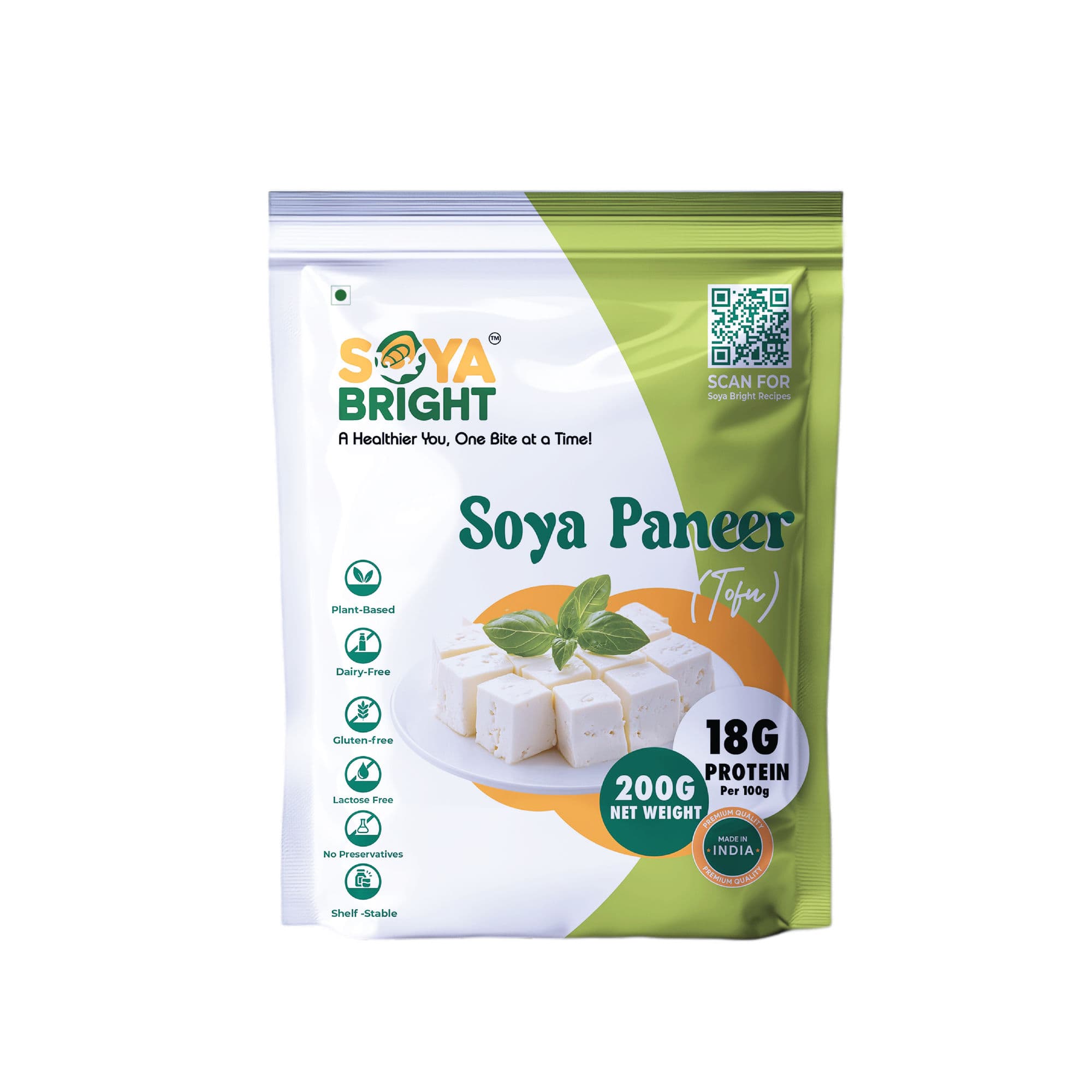
Dairy paneer has more protein by weight: around 18 grams per 100 grams, compared with about 8–15 grams per 100 grams for soya paneer (firm soya paneer sits at the higher end, soft varieties at the lower end). However, soya paneer delivers its protein with far less fat, far fewer calories and zero cholesterol — so you get more protein per calorie. High-protein soya paneer closes the gap completely: Soya Bright Soya Paneer has 18 grams of protein per 100 grams — the same as dairy paneer — with 182 kcal and zero cholesterol.
#2. Fat Levels
Dairy paneer typically has a higher fat content, especially if made from whole milk, averaging around 20 grams of fat per 100 grams. In contrast, soya paneer has a lower fat content, approximately 4-5 grams per 100 grams, making it a leaner option.
#3. Digestion
Soya paneer may be easier to digest for some individuals, especially those who are lactose intolerant, as it does not contain lactose. However, some people may experience digestive issues with soy products. Dairy paneer, while it contains lactose, is often easier to digest than milk due to the cheese-making process, which reduces lactose content.
#4. Taste
The taste of soya paneer is often described as nutty and slightly bland, making it versatile for various dishes. Dairy paneer has a creamier texture and a richer flavor, which many prefer in traditional Indian dishes.
#5. Health Benefits
Soya paneer is rich in phytoestrogens, which can be beneficial for heart health and hormonal balance. It also contains essential amino acids and is a good source of iron. Soya paneer made with calcium sulphate is also a good source of calcium. Dairy paneer, on the other hand, provides calcium and vitamin B12, which are important for bone health and energy metabolism.
#Common Myths
- Myth 1: Soya paneer is unhealthy because it contains phytoestrogens.
- Myth 2: Dairy paneer is always better because it is a natural animal product.
- Myth 3: Soya paneer is only for vegans and vegetarians.
#Side-by-Side Comparison Table
| Factor | Soya Paneer | Dairy Paneer |
|---|---|---|
| Protein Content | 8–18 grams per 100 grams (Soya Bright: 18g) | 18 grams per 100 grams |
| Calories | About 75–145 kcal per 100 grams | About 265–320 kcal per 100 grams |
| Cholesterol | None | Present (from milk fat) |
| Fat Levels | 4-5 grams per 100 grams | 20 grams per 100 grams |
| Digestion | Generally easier for lactose intolerant individuals | May be easier to digest than milk |
| Shelf Life | Shelf-stable options like Soya Bright: 11 months unopened, no fridge | A few days, refrigerated |
| Taste | Nutty, slightly bland | Creamy, richer flavor |
| Health Benefits | Rich in phytoestrogens, iron | High in calcium, vitamin B12 |
#Which One Should You Choose?
- Choose soya paneer if you want a lean, cholesterol-free protein, are lactose intolerant, follow a vegan diet, or are watching your weight, cholesterol or saturated fat intake.
- Choose dairy paneer if you prefer its creamier taste and have no issues with lactose or saturated fat. (For protein alone, a high-protein soya paneer like Soya Bright matches it at 18g per 100g.)
- Want convenience? Shelf-stable soya paneer like Soya Bright keeps for 11 months unopened without a fridge, while dairy paneer spoils within days.
- Or use both: Many families swap soya paneer into everyday dishes like bhurji, tikka and curries, and keep dairy paneer for occasional treats.
In conclusion, both soya paneer and dairy paneer have their unique benefits and drawbacks. The choice between them can depend on individual dietary preferences, health considerations, and taste preferences.

Written by
Soya Bright Team
The team behind Soya Bright at GenHybrid Solutions Pvt Ltd, makers of soya paneer, soy milk and okara in Sangamner, Maharashtra. We check our articles against published research and update them when the evidence changes.
Soya Bright
Put this into practice with Soya Bright
Shelf-stable Soya Bright soya paneer (tofu) and soy milk — 18g protein per 100g of tofu, dairy-free, no preservatives, and no fridge needed until opened. Tofu lasts 11 months unopened below 25°C.